Introduction
In today’s evolving workforce, many people are asking, “What is a remote job?” Simply put, a remote job is a role that allows individuals to work outside of a traditional office setting, typically from home or any location of their choice. This flexible approach to employment has gained widespread popularity across industries, offering employees greater autonomy and a better work-life balance.
From tech and marketing to customer service and education, remote jobs span a wide range of fields and provide opportunities for individuals to thrive professionally without being tied to a physical office.
| Section | Key Points |
| What is a Remote Job | A job that allows employees to work from any location outside a traditional office; offers flexibility and location independence. |
| Benefits | Flexibility, increased productivity, cost savings, better work-life balance, reduced commute stress, access to global talent. |
| Common Roles | Software development, customer service, marketing, project management, data entry, online teaching/tutoring. |
| Types of Remote Jobs | Full-time, part-time, freelance, remote internships, hybrid roles. |
| Challenges | Isolation, communication issues, distractions at home, blurred work-life boundaries, tech dependence, limited career visibility. |
| Essential Skills | Self-motivation, communication, time management, tech proficiency, adaptability, problem-solving. |
What is a Remote Job?
A remote job is a position that allows employees to perform their duties from a location of their choice, rather than being required to be physically present in a corporate office. Remote jobs can vary in terms of their structure, hours, and responsibilities, but they share the commonality of flexibility and location independence.
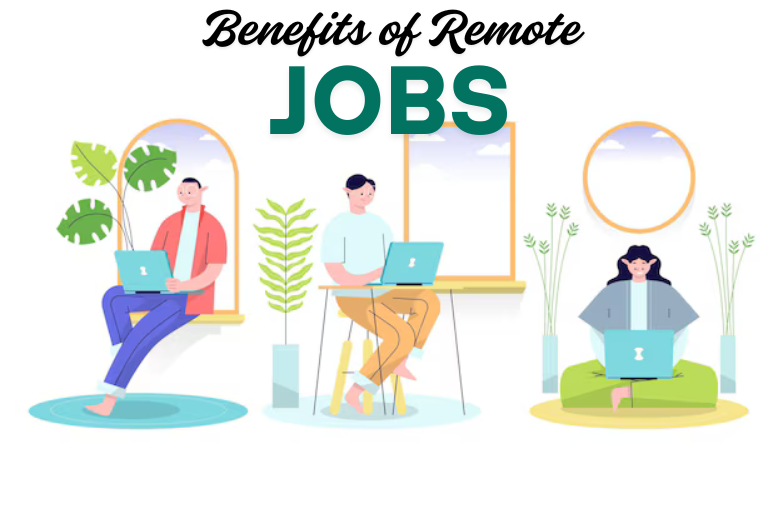
Benefits of Remote Jobs
1. Flexibility
One of the most significant advantages of remote work is flexibility. Employees can often set their own hours, making it easier to balance work and personal life. This flexibility allows for more efficient time management, whether it’s for family commitments, personal projects, or simply working during peak productivity times.
2. Increased Productivity
Many remote workers report higher levels of productivity. Without the distractions of an office environment—such as chatter from colleagues or frequent meetings—employees can focus more on their tasks. Additionally, remote work often allows individuals to create their ideal work environment, which can further boost productivity.
3. Cost Savings
Remote jobs can lead to significant cost savings for both employees and employers. Employees save on commuting costs, work attire, and meals, while employers can reduce expenses related to office space, utilities, and supplies. This financial aspect is particularly appealing for both parties.
4. Access to a Broader Talent Pool
For employers, remote work opens up access to a wider talent pool. Companies are no longer restricted to hiring individuals who live in a specific geographic area, allowing them to find the best candidates regardless of their location. This can enhance diversity and bring in varied perspectives.
5. Improved Work-Life Balance
Remote jobs often contribute to a better work-life balance. Employees can integrate their personal and professional lives more seamlessly, allowing for more time with family and friends, pursuing hobbies, or engaging in self-care activities. This balance can lead to improved overall well-being.
6. Reduced Commute Stress
Eliminating the daily commute can lead to reduced stress and increased time for personal activities. Employees can use the time previously spent in traffic or on public transport for exercise, relaxation, or additional work tasks, contributing to a more positive daily routine.
Common Roles in Remote Work

Remote jobs span various industries and job functions. Common roles include:
1. Software Development
Software developers are among the most sought-after remote professionals. Their work often involves coding, debugging, and collaborating with teams on projects, all of which can be done online.
2. Customer Service
Many companies offer remote customer service positions. Representatives assist customers via phone, chat, or email, providing support and resolving issues from any location.
3. Marketing
Digital marketing roles, including social media management, content creation, and SEO specialists, are increasingly remote. These positions require creativity and strategic thinking, which can be effectively executed from anywhere.
4. Project Management
Project managers can oversee teams and projects remotely, using various tools for collaboration and communication. They ensure that projects are completed on time and within budget.
5. Data Entry and Administrative Support
Administrative roles, including data entry, virtual assistance, and executive support, are commonly remote. These positions often involve managing schedules, processing information, and providing support to teams.
6. Teaching and Tutoring
Remote teaching positions, such as online instructors or tutors, have become popular. Educators can teach students of all ages from anywhere, utilizing digital platforms for instruction.
Types of Remote Jobs
Remote jobs can be categorized into different types based on their structure and requirements:
1. Full-Time Remote Jobs
These positions are typically permanent roles where employees work entirely from home. Full-time remote jobs offer stability and benefits similar to traditional office positions.
2. Part-Time Remote Jobs
Part-time remote jobs allow employees to work fewer hours than full-time positions. This flexibility is ideal for students, caregivers, or those seeking supplemental income.
3. Freelance Remote Jobs
Freelancers work on a project basis and may have multiple clients. This arrangement offers maximum flexibility but can also lead to income variability. Freelancers often work in writing, design, programming, and consulting roles.
4. Remote Internships
Internships that are fully remote allow students or recent graduates to gain experience without being tied to a specific location. These positions can provide valuable skills and networking opportunities.
5. Hybrid Roles
Hybrid roles combine remote work with occasional office presence. Employees may work from home most of the time but are required to attend meetings or collaborate in person on certain days.
Challenges of Remote Jobs

While remote work offers numerous benefits, it also presents challenges that both employees and employers must navigate:
1. Isolation and Loneliness
Remote workers often experience feelings of isolation due to the lack of in-person interaction. Building relationships and maintaining social connections can be challenging when working remotely.
2. Communication Issues
Effective communication can be more difficult in remote settings. Misunderstandings may arise due to the lack of non-verbal cues, and reliance on digital communication can lead to delays or misinterpretations.
3. Distractions at Home
While remote work can reduce office distractions, home environments can present their own challenges. Family members, household chores, and other interruptions can hinder productivity.
4. Work-Life Balance Struggles
Though remote work can improve work-life balance, it can also blur the lines between personal and professional life. Employees may struggle to “switch off” from work, leading to burnout.
5. Technology Dependency
Remote work relies heavily on technology. Technical issues, such as connectivity problems or software malfunctions, can disrupt productivity and create frustration.
6. Career Advancement Concerns
Remote workers may worry about visibility and career advancement opportunities. Being physically absent from the office can sometimes lead to feelings of being overlooked for promotions or important projects.
Skills Needed for Remote Jobs

To succeed in remote jobs, certain skills and qualities are particularly important:
1. Self-Motivation
Remote workers must be self-motivated and disciplined. The absence of a traditional office structure requires individuals to manage their time effectively and stay focused on tasks.
2. Strong Communication Skills
Effective communication is crucial in remote settings. Clear and concise written and verbal communication helps prevent misunderstandings and fosters collaboration.
3. Time Management
Remote employees need strong time management skills to prioritize tasks and meet deadlines. The ability to create and stick to a schedule is essential for productivity.
4. Technical Proficiency
Comfort with technology and digital tools is vital for remote work. Familiarity with collaboration software, project management tools, and communication platforms is necessary for smooth operations.
5. Adaptability
The ability to adapt to changing circumstances and new technologies is important in remote roles. Flexibility allows employees to adjust their work styles and approaches as needed.
6. Problem-Solving Skills
Remote workers often encounter challenges that require quick thinking and problem-solving abilities. Being resourceful and finding solutions independently is valuable in a remote work environment.
Conclusion
Remote jobs represent a significant shift in the way we think about work. The flexibility, productivity, and cost savings they offer make them increasingly appealing to both employees and employers. While challenges such as isolation and communication issues exist, the benefits often outweigh the drawbacks.
As remote work continues to evolve, it is essential for individuals to develop the necessary skills and adapt to this new work landscape. Whether you are seeking a full-time position, freelance opportunities, or a part-time role, understanding the nuances of remote work will help you navigate this exciting and dynamic employment landscape. Embracing the opportunities and challenges of remote jobs can lead to a fulfilling and productive career path.
If you want to read an interesting article about it, explore our “Marketing” category.
FAQs
Remote work is a job that is done outside of a physical office. It is also known as working from home or telecommuting. The point of remote work opportunities is that people can achieve all their usual, daily tasks, without having to commute to an office each day.
In fact, some remote jobs may allow you to set your own work hours. For example, a company may hire a fully remote customer service representative who works set hours from home, while a freelance graphic designer might work remotely with a flexible schedule.
Examples include psychologists, lawyers, and medical directors. Additionally, some of the highest-paying remote jobs include software engineers, cloud architects, corporate counsel, and data scientists. Senior-level management roles, such as finance and marketing directors, also rank among the top-paying remote jobs.
An IR remote (also called a transmitter) uses light to carry signals from the remote to the device it controls. It emits pulses of invisible infrared light that correspond to specific binary codes. These codes represent commands, such as power on, volume up, or channel down.
Software developers, sales representatives, and account managers are the most common remote jobs in the U.S. The average pay for a fully remote job is $107,000 annually.