AI-Proof Careers
Artificial Intelligence (AI) has transitioned from science fiction to everyday reality at an astonishing pace. It now influences how we shop, communicate, drive, learn, and even how businesses make strategic decisions. From chatbots that handle customer queries to algorithms predicting financial trends, AI is quietly embedding itself into almost every industry.
But this progress raises a pressing question: “What does the rise of AI mean for the future of human work?” While some fear mass job displacement, the truth is more nuanced. Specific roles will undoubtedly be automated, but others will not only survive—they will thrive. These AI-proof careers represent professions that remain resistant to automation because they rely heavily on uniquely human skills: empathy, creativity, ethical judgment, and adaptability.
This guide offers a deep dive into these resilient professions, the skills that will keep you relevant, and the industries that promise growth in a world transformed by AI. Think of it as your roadmap to navigating the workplace of tomorrow with confidence and clarity.
AI-Proof Careers at a Glance
| Career Category | Why It’s AI-Proof | Growth Outlook | Key Skills Needed |
| Healthcare | Empathy, ethical care, trust | Very High | Compassion, problem-solving |
| Education | Human mentorship, inspiration | High | Communication, creativity |
| Creative Professions | Original storytelling, design | Moderate–High | Imagination, innovation |
| Skilled Trades | Hands-on adaptability | High | Dexterity, craftsmanship |
| Mental Health | Emotional connection | Very High | Empathy, resilience |
| Leadership & Mgmt | Vision and people management | High | Leadership, foresight |
| Research & Innovation | Curiosity, ethics, discovery | High | Critical inquiry, creativity |
| Entrepreneurship | Risk-taking, disruptive ideas | High | Vision, adaptability |
Why Some Jobs Are AI-Proof?

To understand AI-proof careers, we first need to examine where AI excels and where it falls short.
AI is highly effective at:
- Analyzing large volumes of structured data.
- Identifying patterns and making predictions.
- Repeating defined tasks at scale.
- Performing precision-driven calculations.
However, AI struggles in areas such as:
- Human emotions – It cannot truly empathize.
- Complex creativity – AI can generate content, but it lacks lived experience and cultural depth.
- Ethics and morality – Machines cannot navigate moral dilemmas.
- Contextual flexibility – Humans adapt rapidly to unpredictable environments.
This means that careers requiring empathy, creativity, adaptability, and critical thinking are far more resistant to automation.
Core Characteristics of AI-Proof Careers
What makes a career “AI-proof”? Typically, it involves a mix of the following traits:
- Human-Centric Interaction – Roles built on trust, persuasion, mentoring, or care.
- Unpredictable Environments – Jobs requiring flexibility in dynamic conditions.
- High Emotional Intelligence – Careers that demand understanding, empathy, and cultural sensitivity.
- Creative Innovation – Professions where originality drives value.
- Ethical Judgment and Responsibility – Roles tied to decision-making beyond pure logic.
These characteristics ensure that while AI might augment these roles, it cannot fully replace them.
Top AI-Proof Careers for the Future

1. Healthcare Professionals
Healthcare is one of the most secure and vital industries in the AI era. While AI assists in diagnostics and robotic surgeries, human touch, trust, and empathy remain irreplaceable. A patient might trust an algorithm to analyze test results, but they still need a doctor to explain, comfort, and decide the best treatment ethically.
- In-demand roles: Surgeons, nurses, physiotherapists, mental health therapists, and geriatric specialists.
- Long-term outlook: With global populations aging, demand will skyrocket.
2. Educators and Learning Designers
Education is not just about transferring knowledge; it’s about mentorship, guidance, and shaping character. AI-powered platforms can deliver lessons, but they cannot inspire students or adapt teaching to subtle emotional cues.
- Emerging careers: Online course creators, learning experience designers, educational consultants.
- Why it’s AI-proof: Students need role models and human engagement beyond digital lessons.
3. Creative Professionals
From filmmakers to brand strategists, creativity is one of the most distinctly human advantages. While AI can mimic styles or generate ideas, it cannot replace the depth of storytelling, lived experience, or cultural resonance that true human creativity brings.
- Key areas: Graphic design, content creation, film, advertising, fashion, and architecture.
- Growth path: Using AI as a tool (not a competitor) enhances productivity while preserving originality.
4. Skilled Trades and Craftsmanship
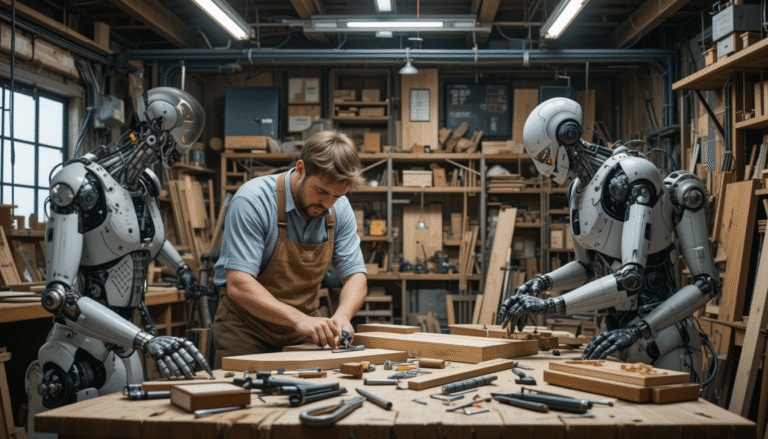
AI and robots struggle with unpredictable, hands-on environments. An electrician diagnosing a wiring fault in a century-old building or a mechanic repairing an unusual engine issue requires flexibility and practical knowledge.
- Examples: Plumbers, carpenters, welders, auto mechanics.
- Job security: Global infrastructure demand ensures long-term relevance.
5. Mental Health and Counseling
Mental health is a growing global priority, especially in the post-pandemic era. While chatbots may offer surface-level support, deep emotional counseling requires human trust, empathy, and connection.
- High demand roles: Psychologists, counselors, therapists, social workers.
- Growth drivers: Rising stress, loneliness, and social pressures worldwide.
6. Management and Leadership Roles
AI can analyze markets and forecast outcomes, but leadership goes beyond numbers. It’s about vision, persuasion, negotiation, and human inspiration. A successful manager must navigate not just data but also people, politics, and unpredictable crises.
- Key skills: Decision-making, conflict resolution, long-term strategic planning.
- Outlook: Human leadership remains at the core of organizations.
7. Research and Innovation Roles
Innovation relies on curiosity, experimentation, and ethical responsibility—qualities that remain human-led. Whether developing new medicines or solving climate challenges, human insight is irreplaceable.
- Examples: Biomedical researchers, AI ethicists, and environmental scientists.
- Growth potential: As challenges grow, demand for researchers increases.
8. Entrepreneurship
Entrepreneurship is inherently human because it thrives on risk-taking, disruption, and vision. Entrepreneurs who learn to integrate AI into their ventures will have unmatched competitive advantages.
- AI-proof edge: Risk appetite and originality cannot be automated.
Comparison of AI-Proof Careers by Industry

| Career Field | Why It’s AI-Proof | Long-Term Growth Potential | Key Human Skills Needed |
| Healthcare | Requires empathy, ethical decisions, and trust | Very High | Compassion, critical thinking, and ethics |
| Education | Human mentorship and inspiration | High | Communication, creativity, guidance |
| Creative Professions | Original storytelling and innovation | Moderate to High | Imagination, design thinking |
| Skilled Trades | Physical adaptability, problem-solving | High | Dexterity, troubleshooting |
| Mental Health | Deep emotional connection and trust | Very High | Empathy, listening, resilience |
| Leadership & Mgmt | Vision, strategy, people management | High | Leadership, foresight, negotiation |
| Research & Innovation | Human curiosity, ethics, and creativity | High | Critical inquiry, adaptability |
| Entrepreneurship | Risk-taking, disruptive thinking | High | Vision, resilience, adaptability |
Industries Poised for Human-Led Growth

- Healthcare & Biotechnology – Growing elderly populations and health innovations mean lifelong demand.
- Education & Training – Personalized mentoring and skill-building remain human-centered.
- Creative Arts & Media – Storytelling, brand identity, and cultural work cannot be outsourced to algorithms.
- Sustainability & Green Energy – Climate change demands innovation and ethical leadership.
- AI Ethics & Governance – Ensuring responsible AI use will itself become a primary human-led industry.
Essential Skills for Building an AI-Proof Career
Even in resilient careers, survival depends on continuous skill development.
1. Emotional Intelligence (EQ)
Understanding emotions and building trust are essential in leadership, healthcare, and counseling.
2. Creativity and Design Thinking
The ability to innovate new solutions and think beyond existing patterns will be invaluable.
3. Critical and Ethical Decision-Making
AI cannot navigate moral dilemmas; humans must intervene where context and culture are relevant.
4. Lifelong Learning and Adaptability
The future belongs to learners. Micro-courses, upskilling, and certifications will keep careers future-ready.
5. Cross-Disciplinary Knowledge
Combining human-centered fields with tech literacy creates unbeatable career opportunities.
Future-Proofing Your Career: Practical Steps
- Blend AI with Human Skills – Learn AI tools, but focus on what machines can’t replicate.
- Choose Human-Centered Professions – Lean into roles rooted in empathy, creativity, or physical adaptability.
- Commit to Lifelong Learning – Stay ahead of automation by constantly evolving.
- Build Your Personal Brand – Highlight uniquely human qualities like creativity and leadership.
- Network with Purpose – Building human connections remains timeless and AI-proof.
Challenges Ahead: Why No Job Is 100% AI-Proof
It’s crucial to acknowledge that no profession is entirely immune. AI is evolving, and even resilient jobs will transform. A teacher might use AI to personalize lessons, or a doctor may rely on AI-powered diagnostics.
The real advantage lies not in avoiding AI but in collaborating with it. The future workforce will thrive where humans and machines complement each other.
Conclusion
AI will reshape work, but it will not erase the need for humans. Instead, it will elevate the importance of careers built on empathy, creativity, leadership, and adaptability.
The lesson is clear: AI-proof careers aren’t about resisting technology—they’re about embracing what makes us uniquely human. By nurturing emotional intelligence, pursuing lifelong learning, and adapting to change, you can build a future-proof career that thrives in the age of intelligent machines.
As the saying goes, AI won’t replace humans—it will replace humans who refuse to adapt. The good news? With the right mindset and skillset, you’ll always be ahead of the curve.
Want to know about Zappos Employment: An Overview of Hiring Process, Types of Job Opportunities, Company Culture, Core Values, And More Information Check out our Industry category.
FAQs
AI can generate news briefs or summarize financial reports, but journalism is not just about relaying facts. Investigative reporting, holding power accountable, and capturing the human side of stories require courage, cultural awareness, and ethical judgment.
Hospitality thrives on human connection. A hotel robot may deliver towels, but it cannot replace the warmth of a personalized greeting, the empathy of a concierge handling a delicate request, or the cultural nuance required in international tourism. Human-led experiences, especially those centered on luxury, culture, and emotional engagement, are likely to remain AI-proof.
Agriculture is becoming increasingly technology-driven, with the use of drones, sensors, and automated harvesting. Yet, the human role in agriculture will remain significant, especially in sustainable farming, food innovation, and adapting to unpredictable weather patterns.
AI already powers robo-advisors that recommend investments. However, money is a deeply personal matter, and trust is essential in financial planning. High-net-worth clients, families, and businesses often prefer guidance that blends technical expertise with ethical responsibility and emotional understanding. For a closer look, see Packing Slip Explained.